Total external static pressure is the resistance the duct system presents to the blower, measured in inches of water column.
What it is
The blower has to push air through the supply ducts and pull it through the returns. The sum of the resistance on both sides is the total external static pressure — external because it excludes the resistance of the equipment's own internal components.
Residential equipment is typically designed for 0.5 in. w.c., and that figure is on the rating plate or in the blower table.
What is actually found
Field measurements on existing systems routinely find 0.8 to 1.2 in. w.c., and sometimes higher.
At double the design pressure, the blower cannot deliver design airflow. Everything downstream follows: less capacity, a temperature rise above the nameplate range in heating, a coil that may freeze in cooling, and rooms at the end of the system that never get their share.
How it is measured
A manometer with two probes, one in the supply plenum after the coil and one in the return before the filter, taken with the system running, a clean filter and all registers open.
The two readings added — one positive, one negative — give the total.
It takes a few minutes with a tool most technicians own, and it is not on most quotes or service reports.
Reading the result
At or below 0.5 — the duct system suits the equipment.
0.5 to 0.7 — high, worth investigating.
Above 0.8 — the system is not delivering its rated performance and the ductwork is the reason.
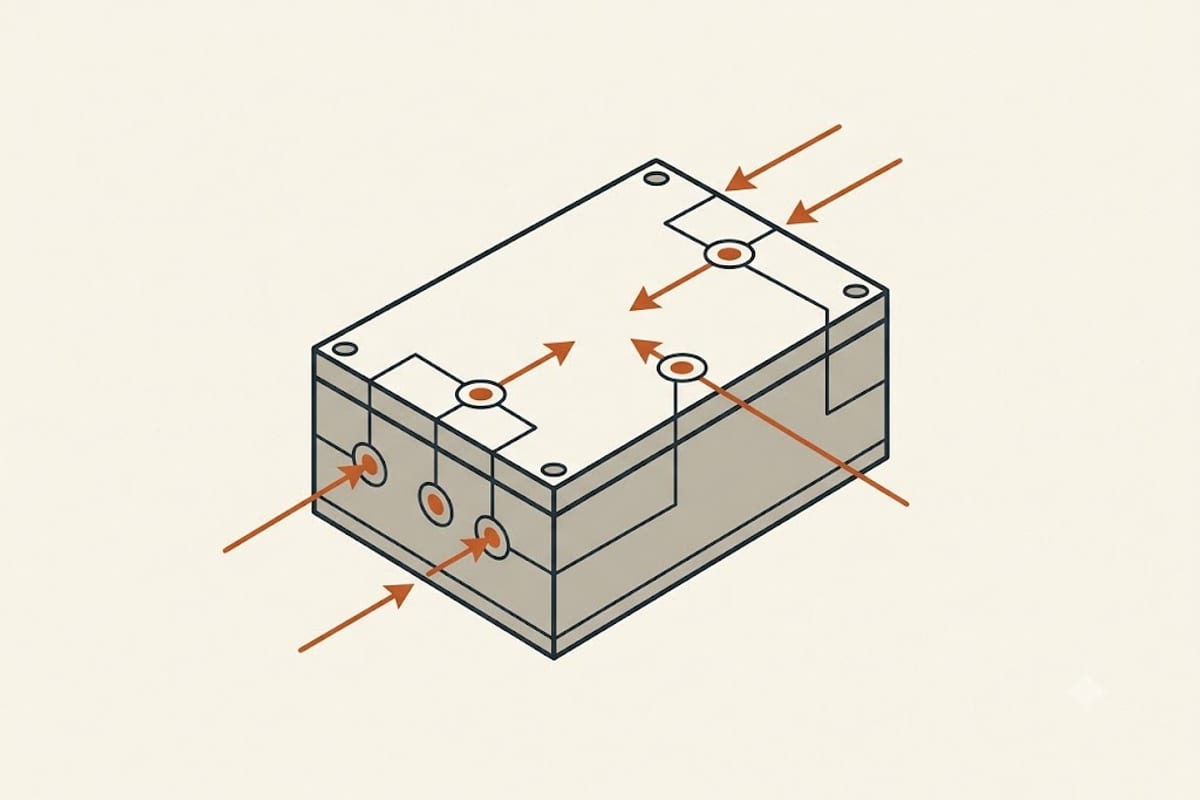
The refinement is to measure at four points rather than two — before and after the filter, and before and after the coil — which separates the filter's contribution, the coil's, the supply side's and the return side's. That tells you not just that the pressure is high but where it is.
Where the resistance usually is
The filter, especially a dense high-MERV filter in a slot sized for a cheap one. This is frequently the largest single item and the cheapest to fix.
The return side, which is undersized far more often than the supply. Many houses have one central return sized for a much smaller blower.
The coil, particularly when dirty.
Undersized trunks and branches, especially where central air was added to a duct system originally designed for heating only.
Crushed, kinked or slack flexible duct.
Closed registers, which raise pressure without saving anything.
Why sizing up the equipment makes it worse
A larger blower moving more air through the same restricted ducts produces higher static pressure still, more noise, and no more air at the far register.
The capacity has to travel through the ducts, and the ducts are the constraint. This is the reason a house that has had three progressively larger systems installed still has a cold back bedroom.
The fixes, in order of value per dollar
Filter area. A four- or five-inch media cabinet has far more surface and far less pressure drop at the same filtration rating than a one-inch filter.
More return. A second return, or a larger grille on the existing one. Frequently the highest-value change in the whole system.
Clean the coil and the blower wheel.
Correct the plenum transitions at the equipment, where abrupt reducers are common.
Stretch or replace the flex, and support it properly.
Resize the worst branches, which is the expensive option.
What to ask for
Measured static pressure before any work and after it, with the equipment's design figure beside it.
Two numbers on a piece of paper, and they say more about how a system will perform than the model number does.