Flex, Rigid & Fittings
What each fitting costs you in equivalent length.
3 articles
4% compressed flex duct pressure drop at 150 CFM
150 CFM through 25 ft of flex, 4% compressed
0.06in w.c.
2.8× the same run in rigid metal — 0.038 in w.c. of pure installation
| Pressure drop over this run | 0.06in w.c. |
|---|---|
| Same run in rigid metalwhat the design assumed | 0.021in w.c. |
| Branch size150 CFM at about 700 fpm | 7″ |
| Multiplier against rigid | 2.8× |
| Share of the 0.5 in w.c. blower budgetand this is ONE branch of many | 12% |
| Ductlooks tidy in the attic and is already worse than it appears | flex, 4% compressed |
Notes
- Flex duct is not the problem; slack flex duct is. Pulled properly taut it costs about twice what rigid metal costs in pressure. Left even slightly slack, the inner liner corrugates and the loss multiplies — 2.8× here. Nothing about that is visible once the ceiling is closed, which is exactly why it keeps happening.
- A single branch eating 12% of the blower budget is the whole story. A residential air handler is designed for about 0.5 in w.c. of total external static, shared between the filter, the coil, the grilles and every duct. That leaves room, but only if the rest of the system is equally disciplined.
- The fix costs almost nothing at install time and a fortune afterwards. Stretch every flex run to at least 95% of its length, support it every four feet with wide saddle hangers so it cannot sag between them, and cut it to length instead of coiling the excess. Retrofitting that once the drywall is up means opening the ceiling.
- Use rigid for the trunk and short flex for the last connection. That is the compromise most good installers settle on: metal where the air travels far and fast, a couple of feet of flex at the boot to absorb vibration and to make the final alignment easy. All-flex is fast to install and slow to run.
- Elbows in flex are worse than elbows in metal, and there is no chart for them. A tight radius bend in flexible duct closes the inner liner into a partial obstruction. Keep the bend radius at least one duct diameter, and never turn a corner by simply letting the duct fall around it.
- Figures here are for a 25 ft branch at 150 CFM. The base equation is the standard ASHRAE friction relation for galvanised round duct; the flex multipliers come from laboratory measurements and are a range rather than a constant, so treat them as the size of the problem rather than a precise answer.
Flex against rigid duct
40 calculations · browse all
- rigid metal duct pressure drop at 75 CFM
- rigid metal duct pressure drop at 100 CFM
- rigid metal duct pressure drop at 125 CFM
- rigid metal duct pressure drop at 150 CFM
- rigid metal duct pressure drop at 200 CFM
- rigid metal duct pressure drop at 250 CFM
- rigid metal duct pressure drop at 300 CFM
- rigid metal duct pressure drop at 400 CFM
- taut flex duct pressure drop at 75 CFM
- taut flex duct pressure drop at 100 CFM
- taut flex duct pressure drop at 125 CFM
- taut flex duct pressure drop at 150 CFM
- taut flex duct pressure drop at 200 CFM
- taut flex duct pressure drop at 250 CFM
- taut flex duct pressure drop at 300 CFM
- taut flex duct pressure drop at 400 CFM
- 4% compressed flex duct pressure drop at 75 CFM
- 4% compressed flex duct pressure drop at 100 CFM
- 4% compressed flex duct pressure drop at 125 CFM
- 4% compressed flex duct pressure drop at 150 CFM
- 4% compressed flex duct pressure drop at 200 CFM
- 4% compressed flex duct pressure drop at 250 CFM
- 4% compressed flex duct pressure drop at 300 CFM
- 4% compressed flex duct pressure drop at 400 CFM
- 15% compressed flex duct pressure drop at 75 CFM
- 15% compressed flex duct pressure drop at 100 CFM
- 15% compressed flex duct pressure drop at 125 CFM
- 15% compressed flex duct pressure drop at 150 CFM
- 15% compressed flex duct pressure drop at 200 CFM
- 15% compressed flex duct pressure drop at 250 CFM
- 15% compressed flex duct pressure drop at 300 CFM
- 15% compressed flex duct pressure drop at 400 CFM
- 30% compressed flex duct pressure drop at 75 CFM
- 30% compressed flex duct pressure drop at 100 CFM
- 30% compressed flex duct pressure drop at 125 CFM
- 30% compressed flex duct pressure drop at 150 CFM
- 30% compressed flex duct pressure drop at 200 CFM
- 30% compressed flex duct pressure drop at 250 CFM
- 30% compressed flex duct pressure drop at 300 CFM
- 30% compressed flex duct pressure drop at 400 CFM
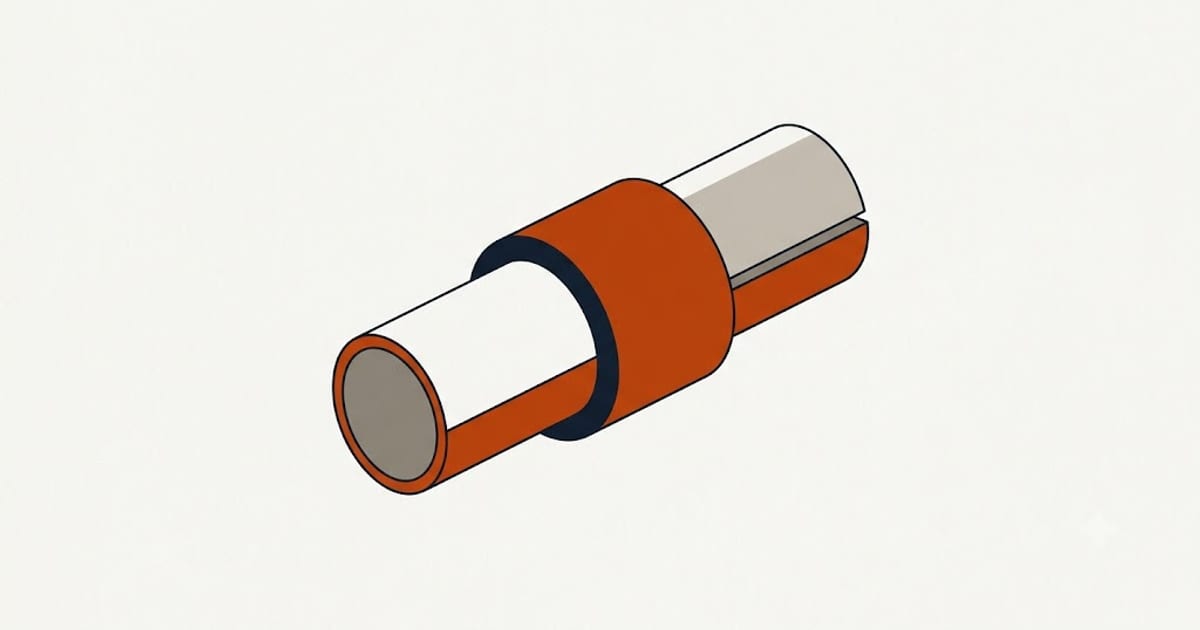 Sealing Ducts — Mastic, Not Duct Tape
The product named after the job is the one product that does not do it.
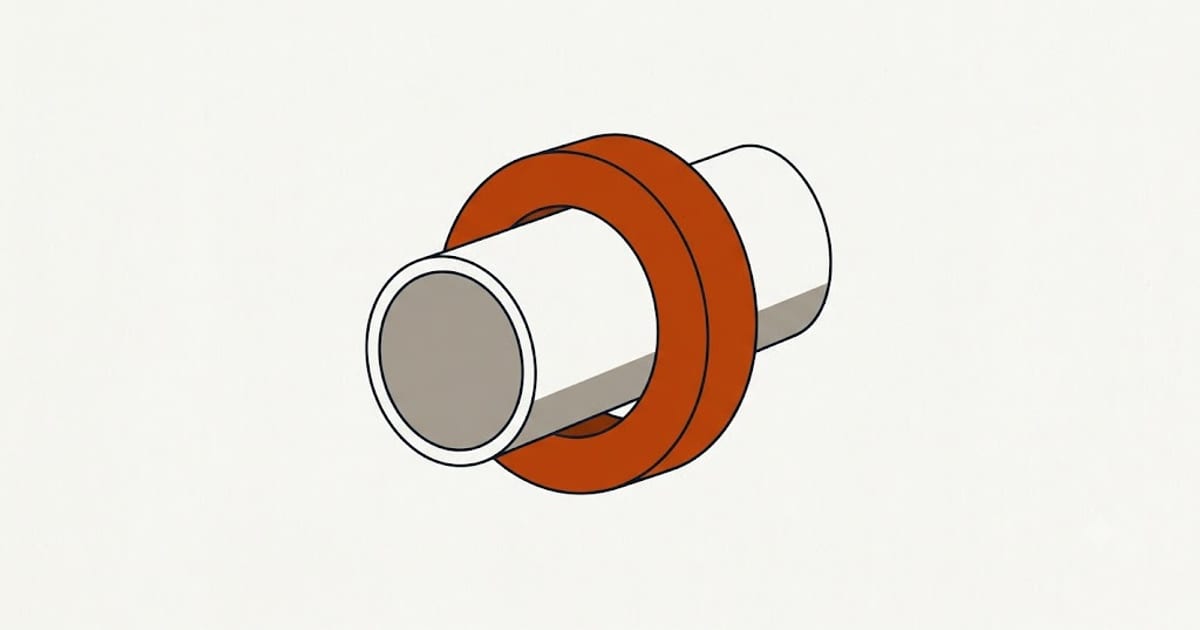 Duct Insulation — R-Value, Where It Is Required and Why It Sweats
Insulating a duct is only half the job. Keeping humid air away from the cold surface inside is the other half.
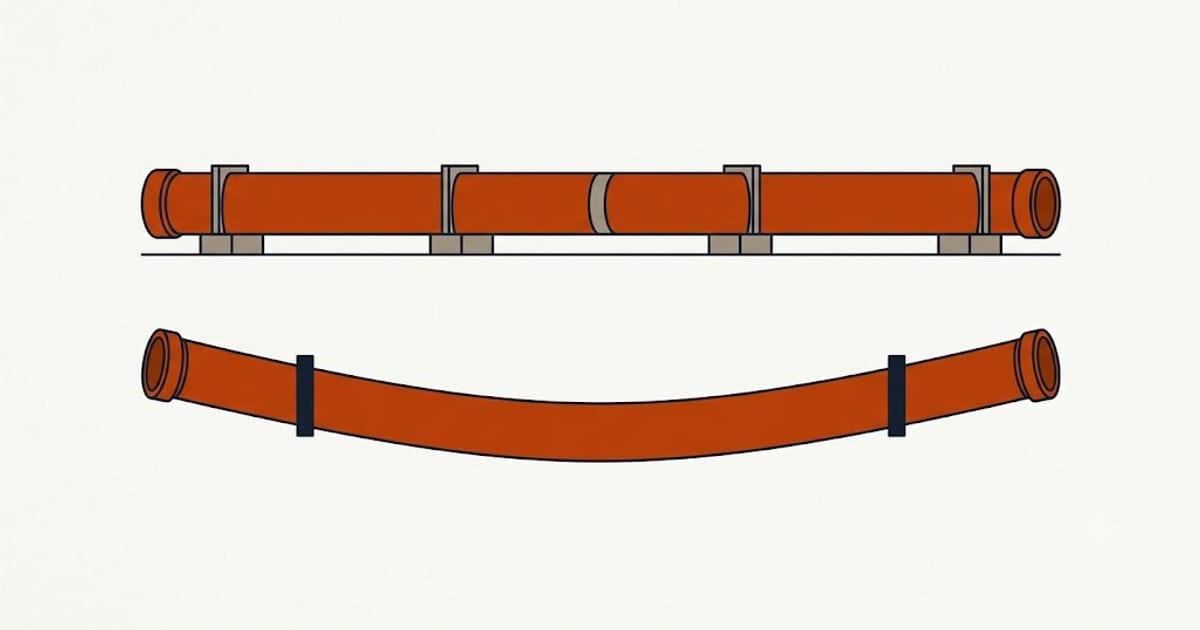 Installing Flex Duct So It Carries the Air It Is Rated For
Flex duct is rated in a laboratory pulled tight and straight. Almost none of it is installed that way.