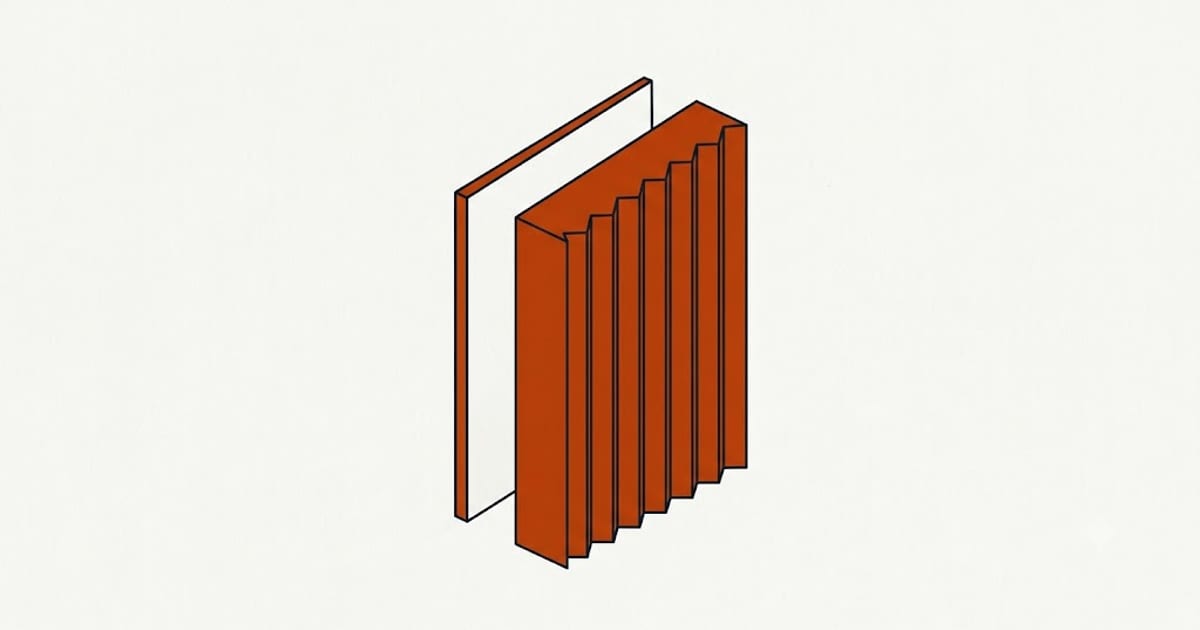
Everything the blower moves passes through the filter, and the filter is the component most often changed by the homeowner without reference to the system it is in.
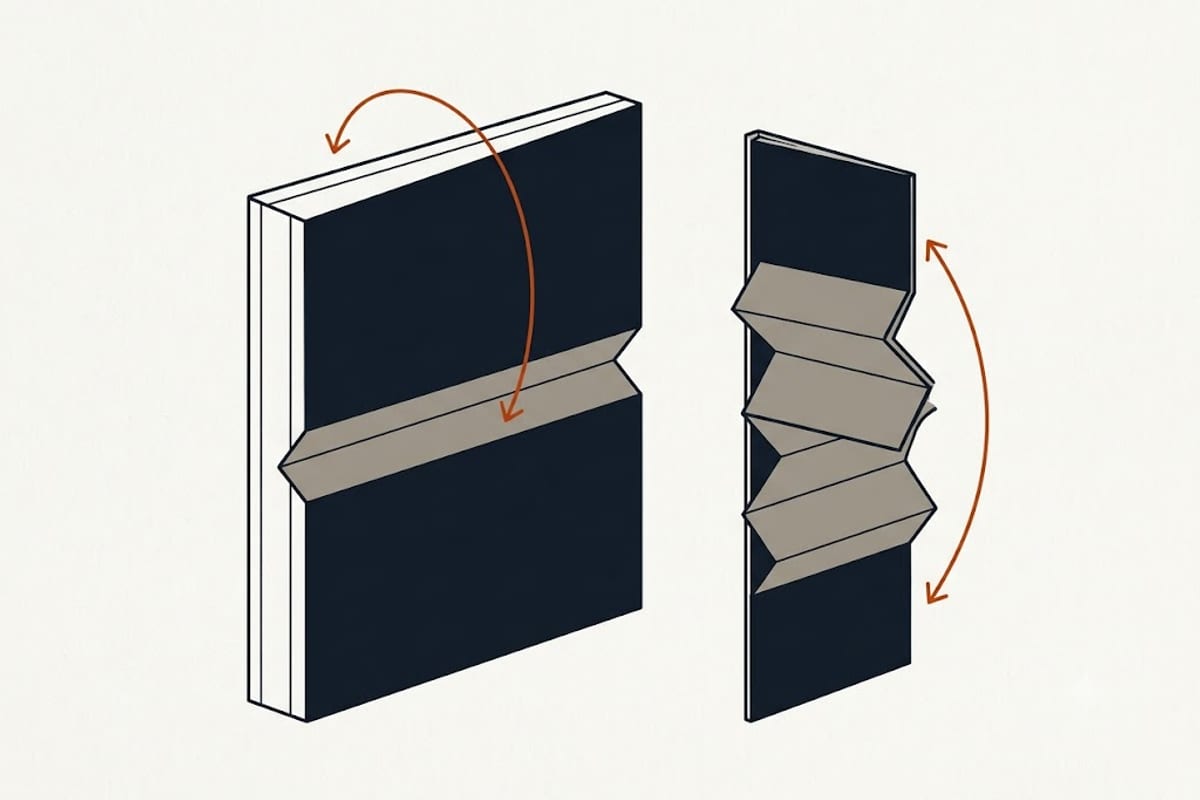
Where the pressure goes
A filter's pressure drop depends on the density of the medium, the face area, and the amount of dirt it holds.
A one-inch pleated filter at MERV 11 or 13 in a slot sized for a cheap fibreglass filter can contribute a large fraction of a system's total external static pressure — sometimes more than all the ductwork combined.
The equipment is typically designed for 0.5 in. w.c. total. A filter taking 0.2 or more of that leaves very little for the ducts.
Why swapping to a cheaper filter is the wrong fix
A low-MERV fibreglass filter has a low pressure drop and it protects the equipment and very little else. It passes most of the particles that matter for indoor air quality, and it lets dust onto the coil and the blower wheel where it is expensive to remove.
The restriction is not caused by the filtration level. It is caused by trying to achieve that filtration level through a small face area.
The correct answer: area
Pressure drop falls as face area rises, for the same medium and the same total airflow.
A four- or five-inch deep media cabinet has several times the effective surface of a one-inch filter of the same nominal size, because of the depth of the pleats. It delivers MERV 11–13 filtration at a fraction of the pressure drop, and it lasts six months to a year instead of one to three.
The cabinet costs money to install once. After that the filters are cheaper per year than monthly one-inch filters, and the system breathes.
Where a cabinet cannot be fitted, a larger filter grille — a bigger return grille with a filter behind it — achieves the same thing by increasing the face area.
Two filters is not better
Some houses have a filter at the return grille and another at the equipment. That doubles the restriction for no filtration benefit worth having.
Choose one location, size it properly, and remove the other.
Measuring it
Static pressure taken before and after the filter gives its contribution directly.
Do it with a clean filter and again with the filter that has been in place, which shows both the design penalty and how much the loading is costing by the end of its interval.
A filter contributing more than about 0.1 in. w.c. clean is worth addressing.
Change intervals
A one-inch filter in a normal house needs changing every one to three months, sooner with pets or during construction.
A four-inch media filter runs six to twelve months.
A dirty filter costs airflow, which costs capacity, and in heating it pushes the temperature rise above the nameplate range and stresses the heat exchanger. In cooling it can freeze the coil.
The direction arrow
Filters have an airflow direction printed on the frame, pointing toward the blower. Fitted backwards, the support structure faces the wrong way and the filter collapses under pressure.
It is a small thing and it happens often.
What good practice looks like
One filter, in a deep media cabinet, sized so the face velocity is low, changed on schedule, with the static pressure measured across it once so the number is known.
That combination gives better indoor air quality and lower static pressure at the same time, which is the opposite of the trade-off most people believe they are making.