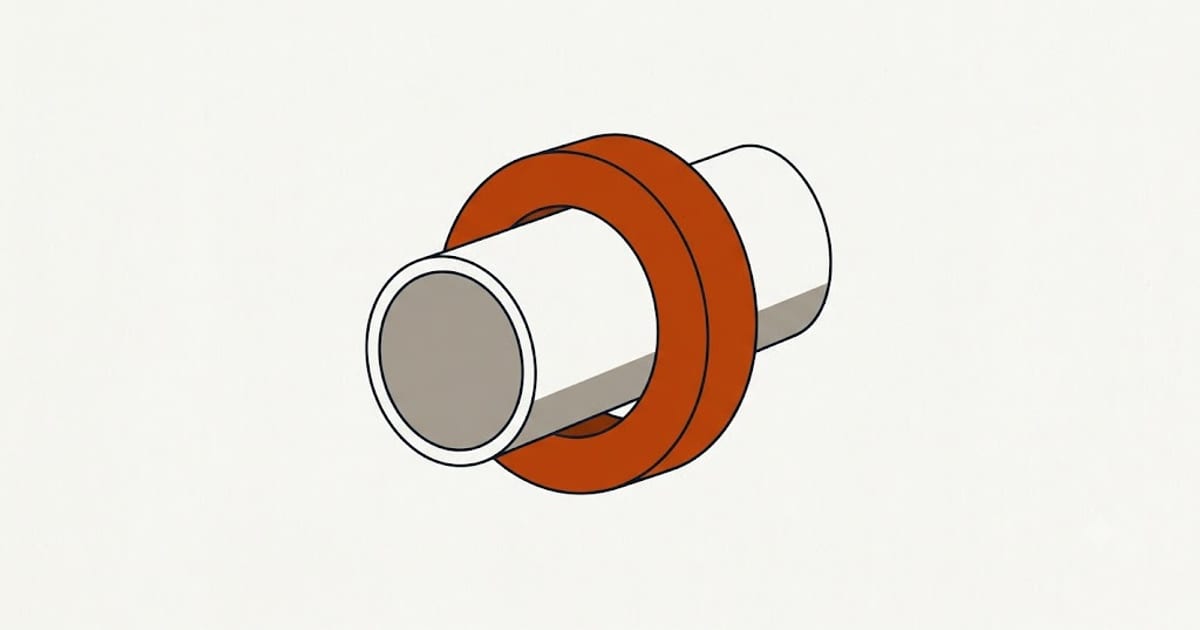
A duct carrying 55°F air through a 140°F attic gains heat along its whole length. A duct carrying 110°F air through a 20°F attic loses it. Insulation reduces both.
The requirement
Energy codes set minimum duct insulation by location, and the values in common use are:
R-8 for supply ducts in an unconditioned attic, which is the usual requirement in most climate zones.
R-6 for ducts in other unconditioned spaces such as a crawl space or a garage, in many codes.
None required for ducts entirely within the conditioned envelope, since heat lost from them is lost into the house.
Local code governs, and several jurisdictions require more than the model code minimum.
Why the location matters more than the R-value
A duct inside the thermal envelope loses nothing, because whatever it loses stays in the house.
That makes moving ducts into conditioned space the complete solution, and insulation the mitigation used when they cannot be moved. On a new build or a major renovation it is worth the design effort; on an existing house it is rarely feasible.
Burying attic ducts in insulation, above the ceiling plane, is a middle option — very effective, and it requires attention to condensation on the duct exterior, which is why it is usually paired with a properly sealed vapour barrier.
The vapour jacket
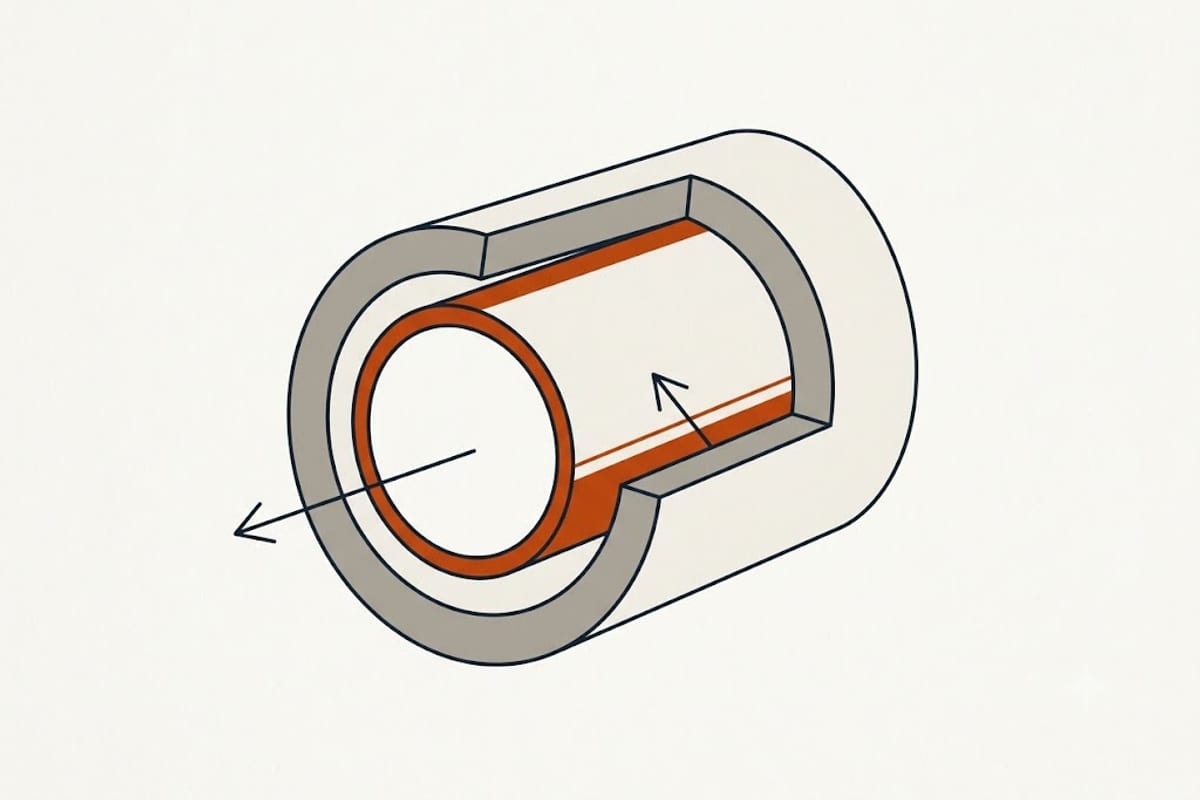
Insulated flexible duct comes with an outer jacket that is a vapour barrier as well as a mechanical cover. Insulation wrapped onto rigid duct has a facing that serves the same purpose.
Its job is to keep humid air away from the cold duct surface. In a hot humid attic, air reaching a 55°F duct condenses on it — and if that happens inside the insulation, the insulation becomes wet, loses most of its value, and drips.
That is the source of ceiling stains that appear in summer and get blamed on the roof.
Every joint, seam and tear in the jacket has to be sealed, and that means at every connection, at every support strap, and wherever it has been nicked during installation.
Where insulation is most often deficient
At the boots, where the duct meets the ceiling. Frequently the insulation stops short and the last foot of metal is bare in the attic.
At the plenum, where the connection to the equipment is sometimes left uninsulated.
Where flex has been compressed by a strap or by framing, thinning the insulation at that point.
Where it has been disturbed by anyone working in the attic since.
Where it is missing entirely on a section replaced at some point.
Checking it
Go into the attic or crawl and look along the runs.
Bare metal anywhere, torn jacket, insulation squashed flat under a strap, or insulation sitting away from the duct with an air gap between — each of these is a section performing well below its rating.
Repairs are inexpensive: wrap, seal the jacket, re-support with wide straps rather than wire.
The interaction with sealing
Insulation reduces conduction. It does nothing about leakage.
A well-insulated leaking duct still loses a fifth of its air into the attic. Sealing comes first and insulation second, and doing both at the same visit is far cheaper than doing them separately.
Where the R-value stops paying
Beyond the code minimum, additional duct insulation returns less than the same money spent on sealing the ducts, air-sealing the attic plane, or adding attic insulation.
The exception is a very long run through an extreme attic, where the accumulated conduction over the length is large and worth attacking directly.