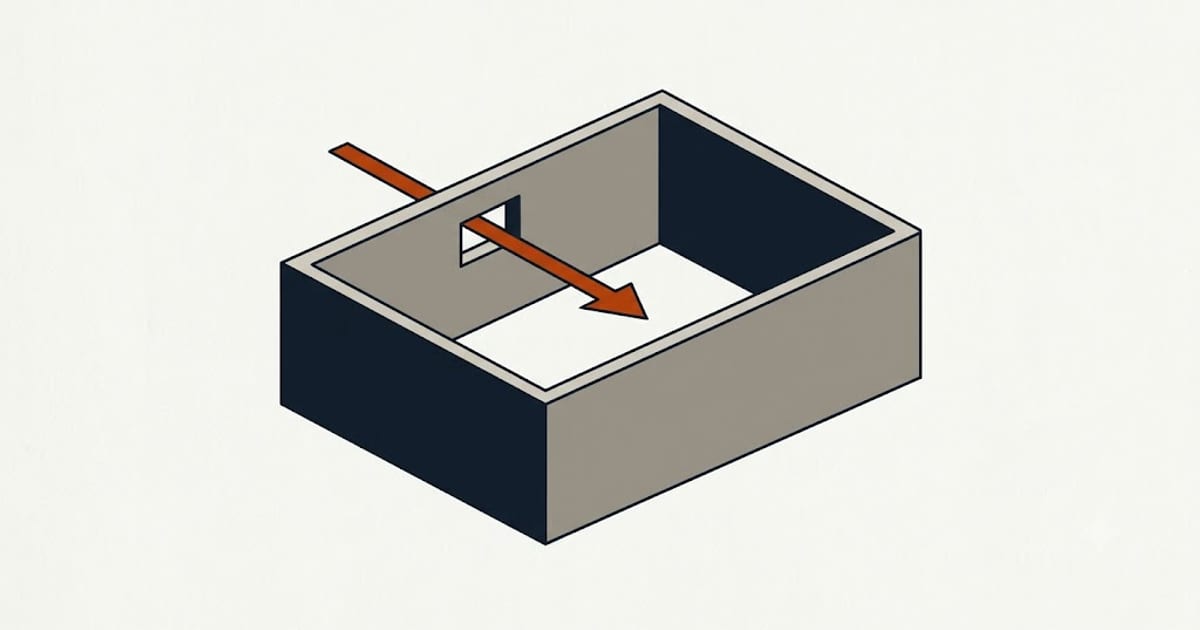
Air pushed into a room has to leave it. If it cannot, it stops arriving.
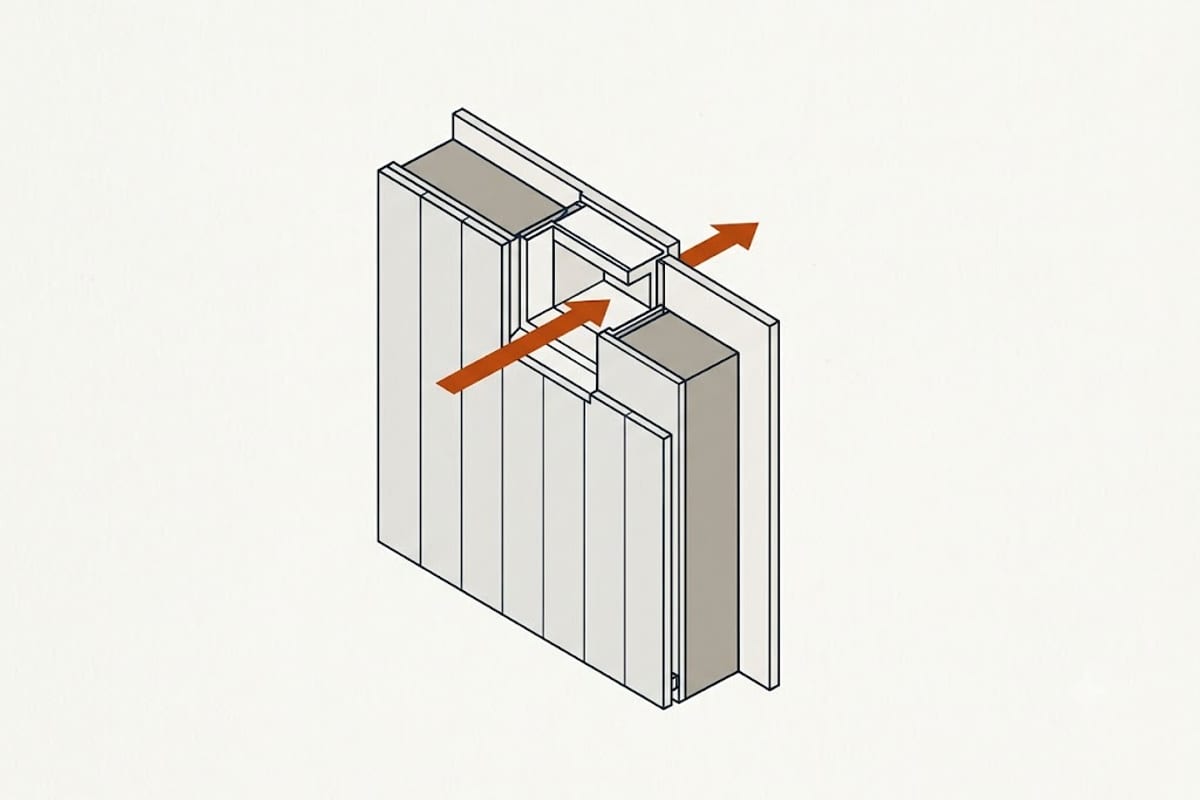
What happens with the door closed
A bedroom with a supply register and no return grille has one exit: the gap under the door.
With the door shut, the room pressurises. As the pressure rises, less supply air enters, and what does enter is forced out through the walls, the ceiling penetrations and the windows.
Meanwhile the rest of the house — where the central return is — goes negative, and it draws replacement air in through its own leaks, from outside, from the attic, or from an attached garage.
The consequences
The bedroom is under-conditioned, and it is closed exactly when it matters, at night.
The house leaks more than it appears to, because the system is driving air through the envelope in both directions.
In a humid climate, the negative side of the house draws in outdoor moisture continuously while the system runs.
In a house with combustion appliances, sustained negative pressure in the room containing them can affect draft.
Measuring it
With the system running and the door closed, a manometer reads the pressure difference between the room and the hallway.
Common guidance is that the difference should stay below about 3 pascals. Rooms with a supply register and only a door undercut frequently measure several times that.
The rough version needs no instrument: close the door with the system running. If it wants to pull shut, or resists opening, or whistles at the gap, the room has no adequate return path.
The remedies
A return grille in the room, ducted back to the equipment. The best solution and the most expensive, and it also carries the room's noise back into the duct system.
A jump duct — a short length of insulated flexible duct connecting a grille in the bedroom ceiling to a grille in the hallway ceiling, over the wall. Effective, quiet, and moderate work in an accessible ceiling.
A transfer grille through the wall above the door, ideally with an offset baffle so light and sound do not pass straight through.
A door undercut, which helps and is usually insufficient on its own. A one-inch undercut across a standard door passes far less air than a bedroom with a normal supply airflow needs.
Sizing the path
The transfer path has to carry the room's supply airflow at a low enough velocity to be quiet — the same free-area principle as a return grille.
A path sized for appearance rather than airflow reduces the pressure difference somewhat and does not eliminate it, which is why undersized transfer grilles are common and only partly effective.
Where this matters most
Tight houses, where the envelope cannot absorb the imbalance.
Humid climates, where the induced infiltration brings moisture.
Houses with the equipment or ducts in the attic, where the negative side draws attic air.
Any bedroom with a substantial supply airflow, which is most of them.
The cheap diagnostic worth doing tonight
Close every interior door in the house with the system running, then walk around and feel the doors.
Any door that pulls or resists is a room with no return path, and that room is on the list. It takes five minutes and it usually explains a complaint that has been attributed to the equipment for years.
Sound is the objection
The reason bedrooms have no return path in the first place is usually privacy: a straight opening between a bedroom and a hallway carries conversation and light.
A jump duct handles this well, because the sound has to travel up, along a flexible duct and back down, which attenuates it considerably.
Transfer grilles with an internal baffle — sometimes sold as sound-attenuating transfer grilles — address the same objection in a wall. A plain grille straight through a wall does not, and that is worth knowing before choosing one.
New construction is the cheap moment
Fitting a jump duct or a proper return in every bedroom during construction is inexpensive and it is required by some codes and by most performance programmes.
Retrofitting it into a finished house is considerably more work, which is why the door test above is worth doing on a house being bought rather than after living in it for a winter.