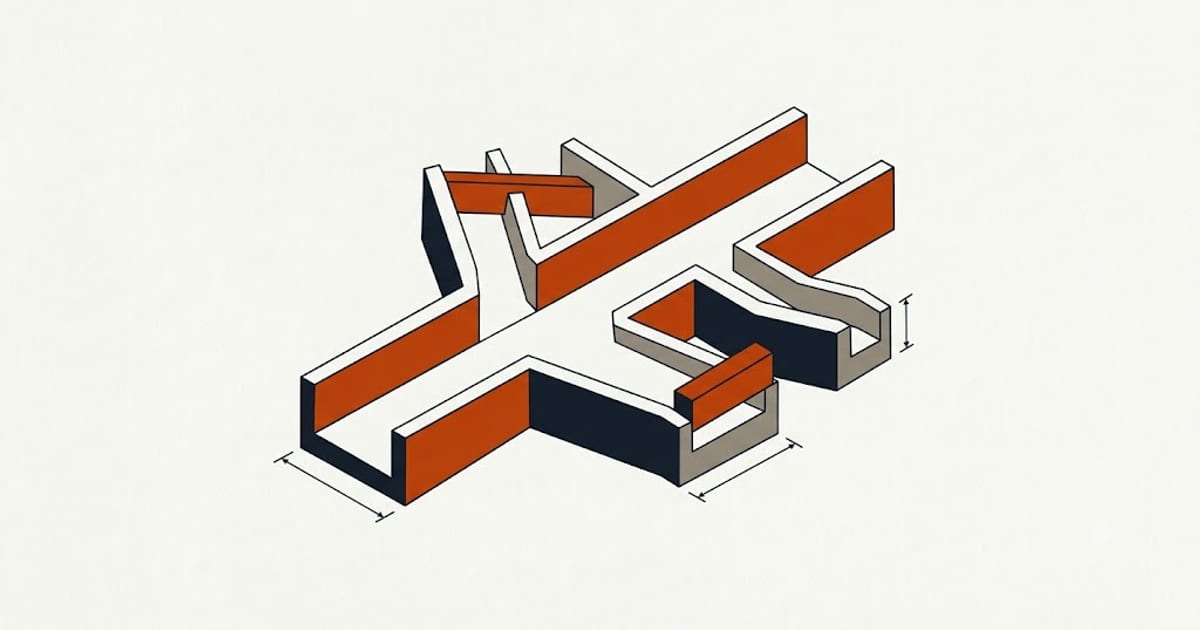
The reasoning is intuitive and the equipment does not cooperate with it.
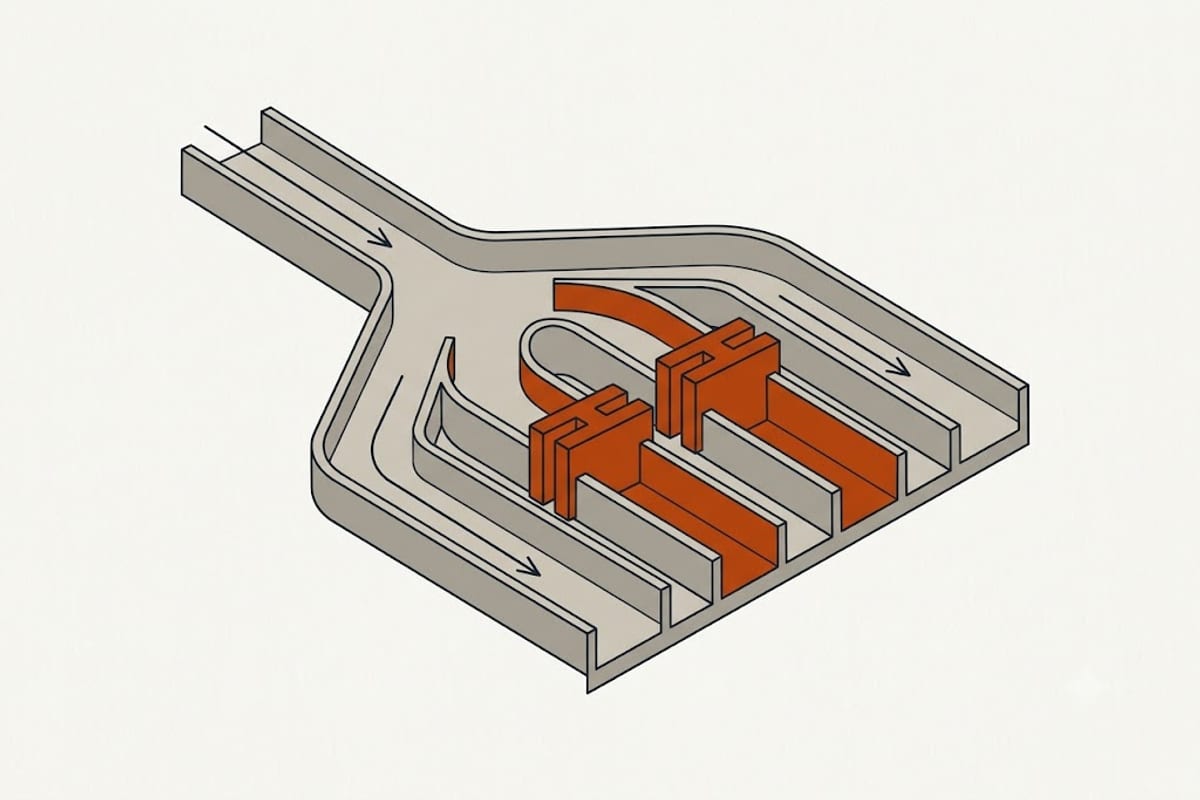
What actually happens
Closing a register does not stop the blower. The blower continues to run, now pushing against a more restricted duct system.
Static pressure rises. The blower is working against greater resistance.
Total airflow falls. A fan on its curve delivers less air at a higher pressure, so the whole system moves less air.
The remaining rooms do not get the closed room's share. They get slightly more than they did, and the system as a whole is delivering less.
The blower may use more power, particularly a constant-airflow ECM, which will work harder to hold its target against the added restriction.
The consequences beyond wasted effort
In cooling, low airflow makes the evaporator coil colder. Below freezing it ices, which blocks airflow further and can send liquid refrigerant back to the compressor.
In heating, low airflow raises the temperature rise above the furnace's nameplate range. The heat exchanger runs hotter than designed, trips the high limit, and over years is stressed toward cracking.
Duct leakage increases. Higher pressure in the ducts pushes more air out through every leak, and in a leaky attic duct system that loss goes up measurably.
The closed room still loses heat. It cools or heats toward outdoor conditions and pulls heat through the walls it shares with the rest of the house, so part of the saving was never there.
How many vents is too many
The commonly cited threshold is closing more than about 20% of the registers, at which point the effect on static pressure becomes significant.
In practice, on a system already running at high static pressure — which is most of them — even a couple of closed registers is worth avoiding.
What to do instead
Balance at the branch dampers. A damper at the takeoff diverts air to the other branches rather than fighting the blower at the end of the line. This is what balancing means and it is the correct mechanism.
Zone the system properly, with motorised dampers and equipment able to turn down — which means variable-capacity equipment, or a bypass, because a zoned single-stage system has exactly the problem described above every time a zone closes.
Install a ductless head for a room used on a different schedule, which is what per-room control is actually for.
Close the door to a genuinely unused room and leave its register open. The room stays part of the system, the air keeps moving, and nothing is restricted.
The exception
A room permanently taken out of use — a sealed-off addition, a storage room — can have its branch damper closed at the trunk and the branch effectively removed from the system.
That is a change to the duct system rather than a restriction at its end, and it is the legitimate version of the idea. It should be paired with a check of the resulting airflow to the remaining rooms, since removing a branch changes the balance of everything else.
The measurement that settles it at your house
Take static pressure with all registers open, then with the ones in question closed.
The difference is the cost of the idea, in the only unit that matters — and it takes a technician five minutes with a manometer already on the system for some other reason.
Magnetic covers and furniture
Sheet magnets sold to cover floor registers do the same thing as closing the damper, more completely, and with the same consequences.
So does a sofa pushed against a wall register or a rug laid over a floor one. These are the accidental version of the same restriction, and they are worth looking for in a room that has always been short of air.
Where the belief comes from
It is true of hot water radiators, which are individually valved and which do reduce output when closed without affecting the rest of the system.
A forced-air system shares one blower and one duct network, so the analogy does not carry across. That is the whole of the confusion, and it explains why the advice persists.