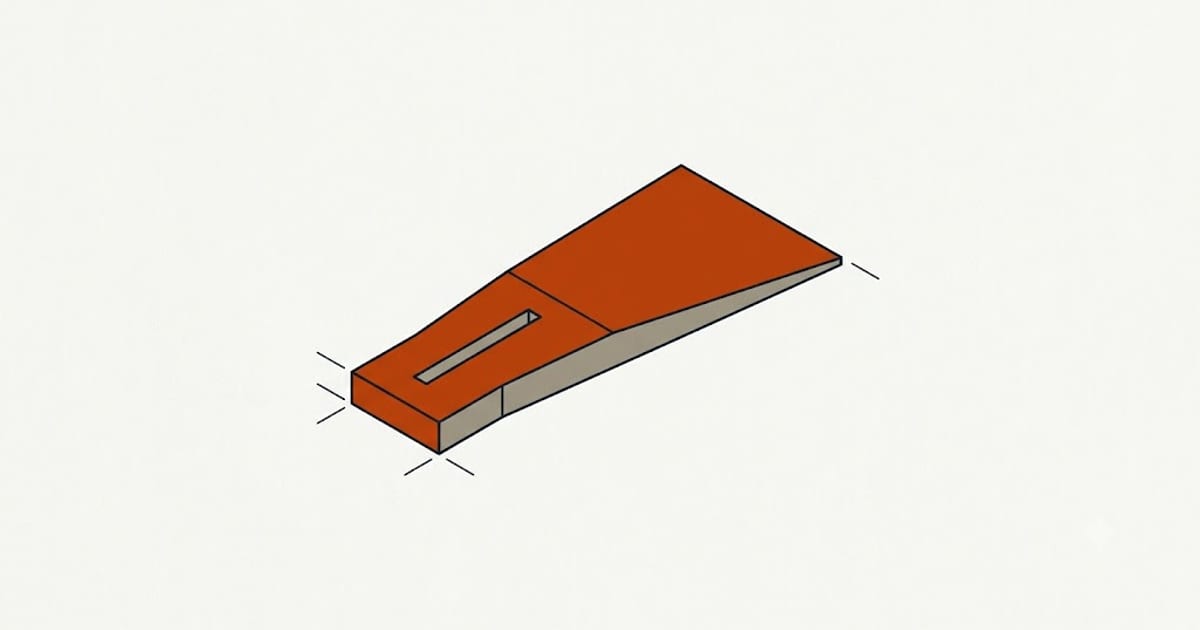
The last component in a duct system is the register, and it is selected on appearance more often than on performance.
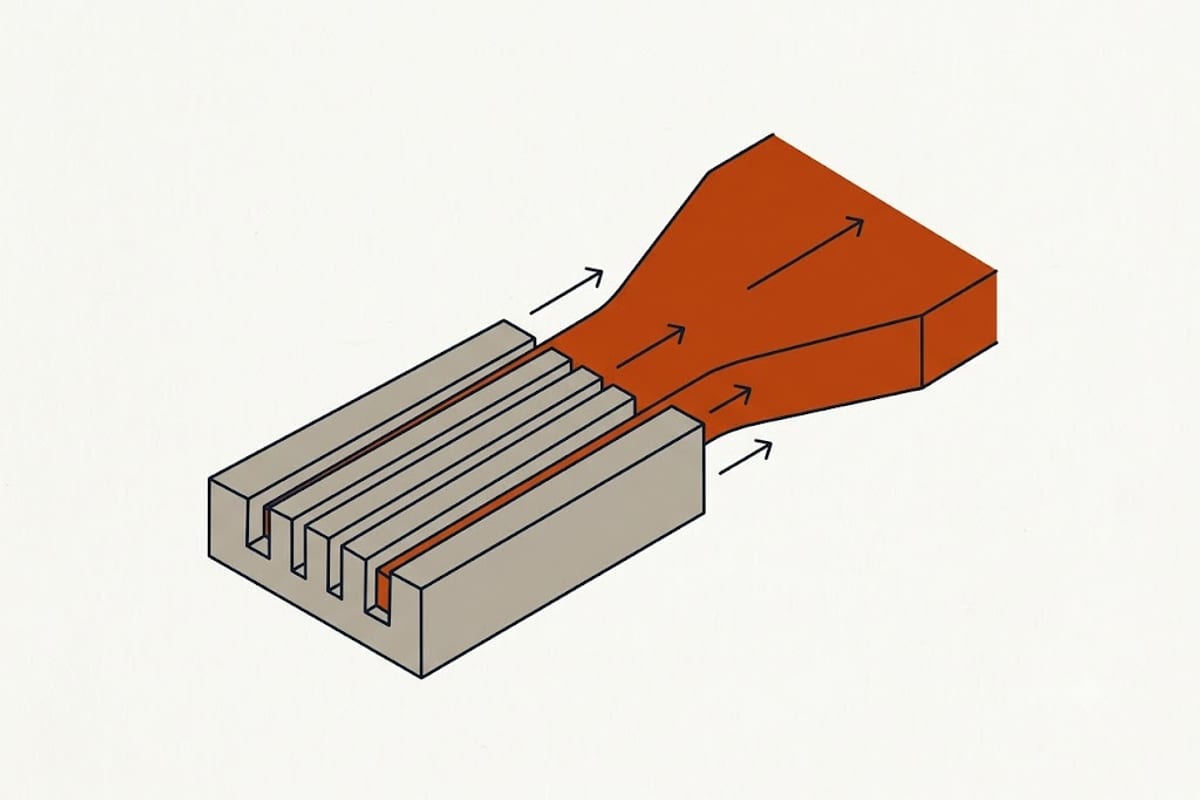
Free area, not face size
A register's louvres and frame block a substantial part of its face. The free area — the open portion — is what air actually passes through, and it is typically well below the gross dimensions suggest.
Two registers of identical outside size can have very different free areas, and manufacturers publish the figure along with the pressure drop and the throw at each airflow.
Sizing from the outside dimensions overstates capacity and produces the two symptoms below.
Noise
Air moving too fast through too little free area whistles.
Face velocity is the controlling number, and design figures are modest — in living spaces a supply register is normally selected so the face velocity stays low enough to be inaudible, and a return grille lower still because it is often at head height.
The most common cause of a noisy register is a duct correctly sized and a register too small for the air it is asked to pass.
Pressure drop
The register is a fitting like any other and it consumes part of the available static pressure.
A restrictive register adds to the total the blower has to overcome, and in a system already at 0.9 in. w.c. it is one of the easier items to improve.
Throw and room mixing
A supply register's job is not to deliver cold air to the spot below it. It is to mix the air in the room.
Throw is the distance the air stream travels before it slows to a set velocity. A register whose throw reaches the far side of the room produces even temperatures; one that drops its air onto the floor a few feet away produces a cold spot and a warm room.
Manufacturers publish throw at each airflow, and ACCA Manual T covers selection and placement.
Placement
Under windows or along exterior walls, throwing up and across, counteracts the downdraught from cold glass in winter and the heat gain in summer. This is the traditional and generally best position.
Ceiling registers need a pattern suited to the room — a directional throw along a long room, a four-way spread in a square one.
Interior wall placement, common in newer construction because the ducts are shorter, works less well and needs more attention to throw.
Do not place a supply register where furniture will block it, which is a design consideration rather than a homeowner's mistake.
Adjusting them
The louvres on most registers adjust, and the small lever behind them opens and closes a damper.
Directing the throw is useful. Closing the damper is not the way to balance a system — that belongs at the branch takeoff, and closing registers raises static pressure and reduces total airflow.
Return grilles
Sized on free area at a lower velocity than supplies, because they are frequently in a hallway at head height and because the return side is where noise is most noticed.
Return grilles are correspondingly larger than people expect. A return grille that looks oversized is usually correct.
What to check on an existing house
A register that whistles is too small for its airflow, or its damper is nearly closed.
A room that is uneven despite adequate airflow at the register may have a throw problem rather than a volume problem — measurable with a flow hood, which separates "not enough air" from "the air is not reaching the far side".
Replacing a restrictive register with one of the same size and a larger free area is one of the cheapest improvements available, and it requires no work on the ductwork at all.