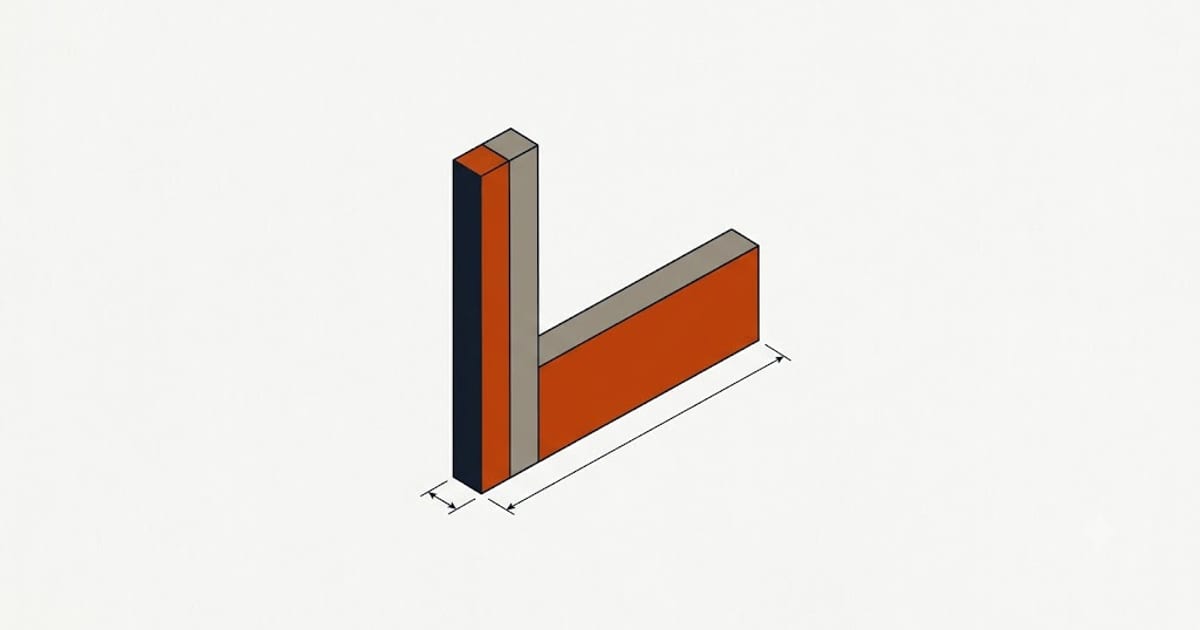
Heat is airflow multiplied by temperature difference. Deliver it at a lower temperature and more air is needed for the same heat.
The temperature difference
A gas furnace delivers supply air at roughly 120–140°F, giving a temperature rise over the return air of 40 to 70 degrees.
A heat pump delivers supply air at roughly 95–105°F, giving a rise of perhaps 20 to 30 degrees.
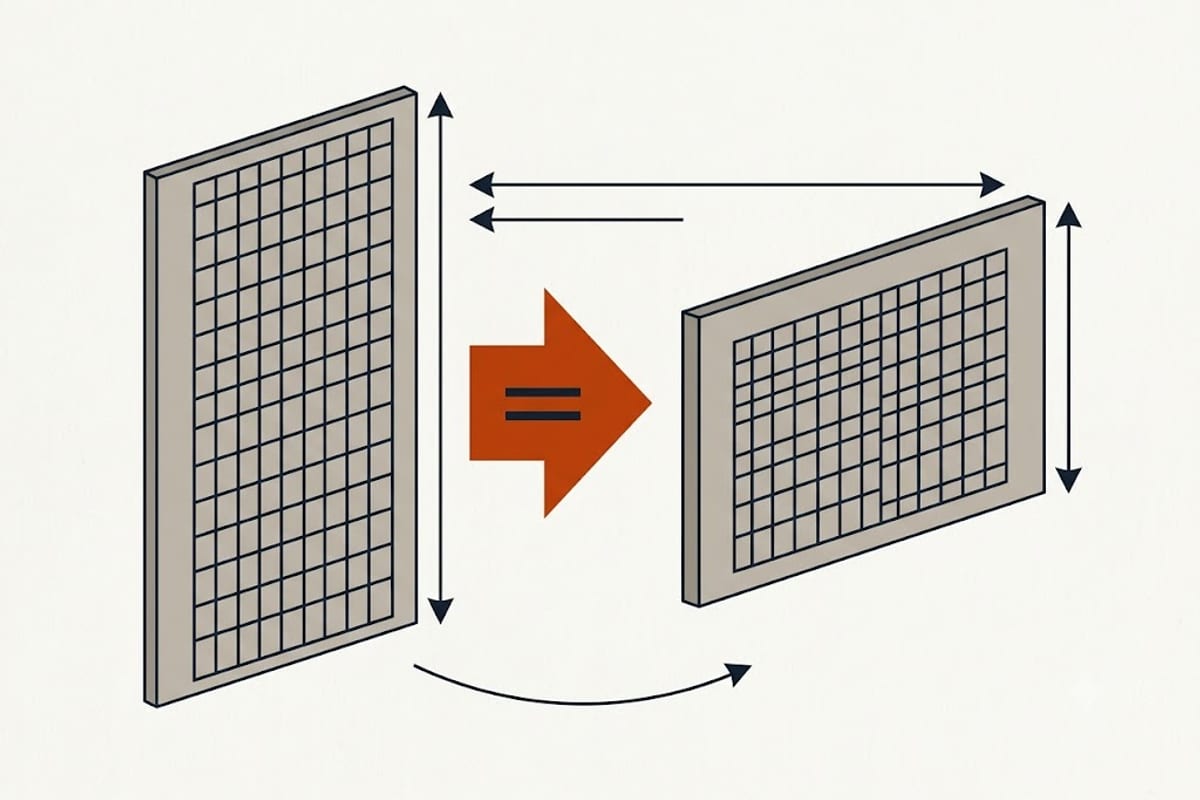
To move the same heat with half the temperature rise, the system has to move close to twice the air.
What that means for existing ducts
A duct system sized for a furnace was sized for the smaller airflow.
Replacing that furnace with a heat pump on the same ducts pushes the static pressure up, the blower cannot deliver the required airflow, and the result is a system that heats slowly and blows air that feels cool.
Ninety-five degree air feels cool against skin at body temperature, which is why heat pump supply air is often described as draughty even when the system is working correctly. Undersized ducts make it worse by lowering the volume as well.
The cooling side is usually the governing case anyway
Cooling airflow is around 400 CFM per ton, and in most houses that requirement already exceeds what the heating side needed.
So a duct system sized properly for cooling is generally adequate for a heat pump's heating airflow. The problem arises in houses where cooling was added later to a heating-only duct system, or where the ducts were never sized for either.
That describes a large share of the housing stock in cold climates, which is exactly where heat pumps are now being retrofitted.
What to check before converting
Static pressure on the existing system, with the existing equipment running. A reading already near or above 0.8 in. w.c. means there is no headroom for more airflow.
Return area, which is the usual constraint.
Filter arrangement, which is the cheapest thing to improve.
Whether the trunk reduces and whether the branches are sized for the cooling airflow or the heating airflow.
The corrections that make it work
More return, first and usually most effective.
A deeper filter cabinet, which frees up a meaningful part of the pressure budget.
Correcting the worst fittings — a sharp elbow at the plenum, a bare stub takeoff on the longest branch.
Enlarging the worst branches, which is the expensive option and sometimes necessary for one or two runs.
A variable-speed blower, which does not fix restriction and does hold airflow better against it than a fixed-speed motor.
Register velocity and the draught complaint
The same air volume through registers sized for a lower flow arrives faster and feels more like a draught.
Where a conversion is planned, checking the register selection is worth doing — a register with more free area at the same size costs little and removes a complaint that would otherwise be attributed to the heat pump.
Ducted mini-splits are different
A ducted inverter air handler serving a few rooms through short runs inside the envelope avoids all of this, because the duct system is designed for it from the start.
Where an existing duct system is genuinely inadequate and correcting it is expensive, that is worth pricing alongside the duct work rather than after it.
Backup heat changes the airflow again
A heat pump with electric resistance backup runs the strip heaters in the same airstream, and they have their own minimum airflow requirement to avoid overheating.
That figure is on the air handler's rating plate, and it is usually higher than the heat pump alone requires. A duct system that is marginal for the heat pump will be worse when the strips engage, which is exactly the coldest moment.
Dual fuel
Where a heat pump is paired with a retained gas furnace, the furnace blower serves both.
Two airflow settings are then needed — the higher one for the heat pump, the lower one for the furnace's temperature rise — and equipment with a variable-speed blower can hold both. A single-speed blower set for one will be wrong for the other, which is a common source of complaints after a dual-fuel conversion.